Canadian Pacific Kansas City Limited
Moat Score — Canadian Pacific Kansas City Limited
Total Moat Score
18 / 30
| Moat Factor | Score | Analysis |
|---|---|---|
| Intangible Assets Patents, trademarks, brand strength, or regulatory licenses that protect a company's products or services from being freely copied by competitors. | 1 / 5 | Rail operating rights and regulatory approvals matter, but CPKC's advantage is physical network scarcity rather than patents or brand. |
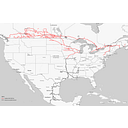
| Cost Advantage A durable ability to produce goods or services more cheaply than competitors — through scale, unique access to cheap inputs, location, or process — that lets a company undercut rivals or out-earn them at the same price. | 4 / 5 | Owning and operating a ~20,000-mile rail network gives CPKC a structural fixed-cost base that is nearly impossible for a new entrant to replicate. |
| Pricing Power The ability to raise prices without losing meaningful business, because the product or service is differentiated, mission-critical, or has few good substitutes. | 3 / 5 | As the only single-line railway spanning Canada, the U.S., and Mexico, CPKC retains meaningful pricing power on routes where trucking is not a practical substitute. |
| Network Effect The product or service becomes more valuable to every user as more people or organizations use it, making an established leader harder to displace. | 2 / 5 | The trilateral network creates value that increases with route density and interconnection, though this is closer to a scale/network-scope advantage than a classic user-driven network effect. |
| Switching Costs The money, time, or operational disruption a customer would face switching to a competitor, which locks in existing customers and supports renewals. | 3 / 5 | Shippers with rail-dependent supply chains and long-term contracts face real switching costs in moving volumes to alternative railroads or trucking. |
| Efficient Scale A market that can only profitably support a small number of players, so incumbents face limited threat from new entrants even without other defenses. | 5 / 5 | Class I railroads are a textbook efficient-scale industry: the capital cost of duplicating a rail network is prohibitive, leaving only a handful of incumbents per region. |