AST SpaceMobile Inc.
Business Overview: AST SpaceMobile, Inc. (NASDAQ: ASTS)
Executive Summary
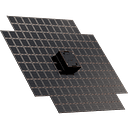
AST SpaceMobile, Inc. is building the first space-based cellular broadband network designed to connect directly to standard, unmodified smartphones — without requiring any special satellite phone hardware — using a constellation of large, proprietary low Earth orbit (LEO) satellites (branded BlueBird) equipped with massive phased-array antennas. The company's goal is to eliminate mobile network "dead zones" by extending existing mobile carriers' coverage into areas with no terrestrial cell tower coverage, including rural regions, oceans, and remote areas globally.
Headquartered in Midland, Texas, AST SpaceMobile has secured commercial agreements and equity partnerships with major mobile network operators including AT&T, Verizon, Vodafone, and Rakuten, positioning its technology as a complementary extension of these carriers' existing spectrum and networks rather than a competing standalone wireless service.
1. Core Business Model & How They Work
AST SpaceMobile's model is built on partnering with existing terrestrial mobile carriers to extend their coverage via satellite, rather than building an independent, standalone wireless network from scratch.
[ Large Phased-Array Satellite Constellation (BlueBird) ] ➡️ [ Direct Connection to Standard, Unmodified Smartphones ] ➡️ [ Partner with Existing Mobile Carriers (AT&T, Verizon, Vodafone, Rakuten) Using Their Licensed Spectrum ] ➡️ [ Extend Carrier Coverage to Dead Zones ] ➡️ [ Revenue Share / Service Agreements with Carriers ]Key Operational Drivers
- Direct-to-Standard-Device Technology: AST SpaceMobile's core technical differentiator is enabling satellite connectivity to work with existing, unmodified smartphones already in consumers' pockets, requiring no special satellite phone hardware — a significant technical achievement given the enormous satellite antenna size required to communicate with a standard phone's small antenna and low transmit power.
- Carrier Partnership Model (Spectrum Access): Rather than acquiring its own wireless spectrum and building a competing network, AST SpaceMobile partners with existing mobile network operators to use their already-licensed spectrum, extending carrier coverage as a complementary satellite layer — a capital-efficient go-to-market strategy that avoids costly spectrum acquisition and lengthy independent carrier licensing.
- Large-Satellite Constellation Strategy: AST SpaceMobile's BlueBird satellites are significantly larger than typical LEO communications satellites, featuring large phased-array antennas needed to achieve sufficient signal strength for direct connection to standard phones — a distinct technical approach from competitors' smaller satellite designs.
- Global Carrier Partnership Network: AST SpaceMobile has built commercial and equity relationships with major mobile carriers across multiple countries and regions, aiming to create a broad, multi-market addressable footprint for its satellite coverage extension service.
2. Business Model Components
| Component | Description | Role |
|---|---|---|
| BlueBird Satellite Constellation | Large phased-array LEO satellites enabling direct-to-standard-device connectivity | Core technology and capital investment |
| Carrier Partnerships (AT&T, Verizon, Vodafone, Rakuten, others) | Commercial and equity agreements to extend partner carriers' coverage using their spectrum | Primary go-to-market and revenue model |
| Government/Defense Applications | Potential government and defense use cases for secure, resilient satellite connectivity | Diversification opportunity beyond commercial carrier partnerships |
3. Competitive Landscape
Key Competitors
- SpaceX Starlink Direct to Cell (with T-Mobile): The most prominent and well-resourced direct competitor, pursuing a similar direct-to-standard-device satellite connectivity strategy in partnership with T-Mobile, backed by SpaceX's massive existing Starlink satellite manufacturing and launch infrastructure.
- Lynk Global: Another direct-to-device satellite connectivity company pursuing a similar market opportunity, generally with smaller satellites than AST SpaceMobile's approach.
- Traditional satellite phone providers (Iridium, Globalstar): Offer satellite connectivity but require specialized satellite phone hardware rather than standard smartphone compatibility, a fundamentally different and more limited addressable market.
Dynamics
The direct-to-device satellite connectivity market is a genuinely new and rapidly developing category, with AST SpaceMobile and SpaceX/Starlink representing the two most prominent and well-capitalized competitors pursuing large-satellite approaches; competitive positioning will likely be determined by satellite constellation deployment speed and scale, network capacity/performance, and the breadth and exclusivity of carrier partnership relationships in each market.
4. Strategic Strengths & Moats vs. Strategic Risks
Competitive Strengths (The Moat)
- Patent-protected, proprietary large phased-array satellite technology representing a significant and hard-to-replicate engineering achievement.
- Broad global carrier partnership and equity relationships (AT&T, Verizon, Vodafone, Rakuten, and others) create multi-market distribution reach and reduce go-to-market/spectrum acquisition costs.
- First-mover technical credibility following successful demonstration of direct-to-standard-device connectivity milestones.
Strategic Risks & Vulnerabilities
- Intense, Well-Capitalized Competition: SpaceX's Starlink Direct to Cell service, backed by SpaceX's existing satellite manufacturing scale and launch cost advantages, represents a formidable competitive threat given SpaceX's ability to rapidly deploy satellites.
- Constellation Deployment & Capital Intensity: Building out a full-scale satellite constellation requires substantial ongoing capital investment and successful, timely satellite manufacturing and launch execution.
- Technical/Regulatory Execution Risk: Achieving sufficient network capacity, latency, and coverage performance at commercial scale, alongside navigating spectrum-sharing regulatory approvals across multiple countries, carries meaningful execution risk.
- Carrier Partner Dependency: AST SpaceMobile's revenue model depends on the continued strategic priority and successful commercial rollout of its service by partner carriers rather than being fully within its own control.
5. Financial Overview & Performance Matrix
| Metric | Company Profile | Strategic Context |
|---|---|---|
| Business Stage | Early commercial-stage, deploying initial satellite constellation | Revenue scale still developing relative to long-term network buildout ambitions |
| Core Technology | Large phased-array satellites enabling direct-to-standard-device connectivity | Differentiated technical approach versus smaller-satellite competitors |
| Key Partnerships | AT&T, Verizon, Vodafone, Rakuten, and other global carriers | Provides broad multi-market distribution and spectrum access |
| Capital Requirements | Substantial ongoing satellite manufacturing and launch capital needs | Central execution and financing risk factor |
6. Summary Conclusion
AST SpaceMobile has established itself as a technical pioneer and one of the two most prominent competitors in the emerging direct-to-standard-device satellite connectivity market, leveraging a distinctive large-satellite phased-array approach and broad global carrier partnerships to extend mobile coverage into previously unreachable areas.
The central long-term strategic question is competitive execution against a formidable, better-resourced rival: AST SpaceMobile's success depends on successfully scaling its BlueBird satellite constellation to commercial capacity fast enough to establish a durable market position and defend its carrier partnerships before SpaceX's Starlink Direct to Cell service, backed by SpaceX's substantial existing satellite manufacturing and launch infrastructure advantages, captures the majority of this large, newly emerging market opportunity.